Prerequisites for Centrifugation: A Technical Guide for Industrial Separation Selection
In industrial process engineering, choosing the right separation technology can directly impact your production yield, product purity, and overall operational costs. While centrifugal technology offers unmatched high-efficiency separation, not every slurry or liquid mixture is an immediate candidate. Understanding the prerequisite for centrifugation is the vital first step before investing in heavy-duty industrial centrifuges.
So, what makes a product suitable for centrifugal separation rather than settling tanks or pressure leaf filters? This comprehensive technical guide breaks down the essential criteria from both mechanical and chemical engineering perspectives.
1. Mechanical Separability (The Physical Foundation)
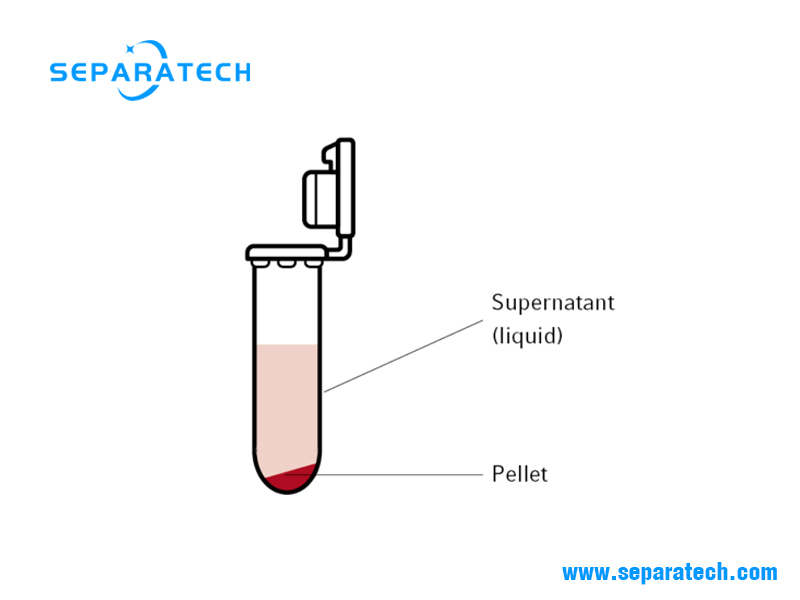
The absolute primary prerequisites for centrifugation is that the components of your mixture must be mechanically separable. Centrifugal forces—whether delivered by a high-speed disc stack centrifuge or a continuous decanter centrifuge—accelerate natural sedimentation.
If the solid particles are fully dissolved in the liquid phase (like salt dissolved in water), mechanical separation is impossible. For centrifugation to work, the product must be a suspension, emulsion, or a multi-phase liquid mixture where the constituent parts maintain their distinct physical boundaries.
2. Density Differences Between Phases
Centrifugal separation operates based on Stokes’ Law. The velocity of particle sedimentation is directly proportional to the density difference between the continuous phase (liquid) and the dispersed phase (solids or another liquid).
- Solid-Liquid Separation (Clarification): The suspended solids must have a higher or lower density than the liquid medium. A greater density gap ($\Delta\rho$) results in faster, cleaner solids cake discharge.
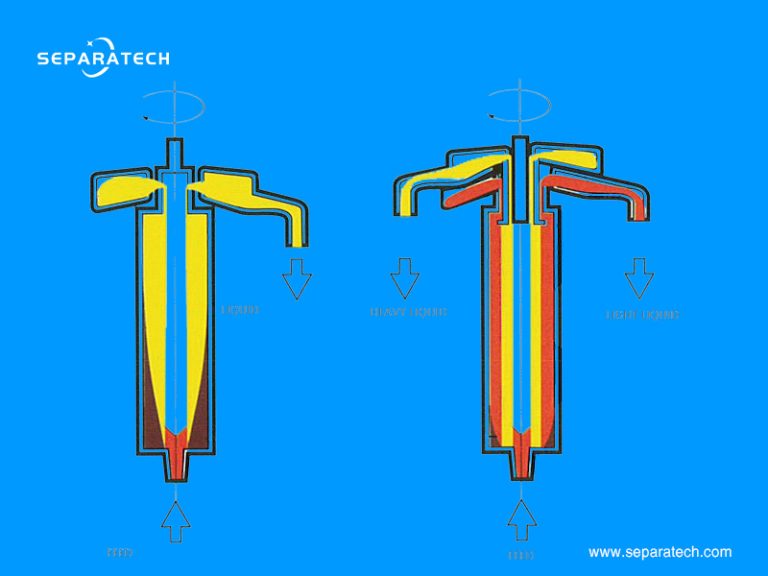
- Liquid-Liquid Separation (Purification): When separating two immiscible liquids (such as oil and water in vegetable oil refining), there must be a clear density contrast.
If the densities of the two phases are identical (Δ𝜌=0), even the maximum G-force generated by a tubular bowl centrifuge cannot force them apart.
3. Emulsification Control and Liquid Stability
Another critical chemical prerequisite for centrifugation is the absence of strong, chemically bound emulsification.
When separating liquid-liquid mixtures, if severe emulsification has occurred—often stabilized by surfactants, extreme blending, or specific chemical agents—the droplets become too microscopic to be influenced efficiently by centrifugal force alone. To optimize your feed for centrifugal separators, the mixture must either be non-emulsified, or pre-treated with thermal or chemical demulsifiers to break the stability before entering the centrifuge bowl.
Summary Matrix: Matching Feed Prerequisites with Centrifuge Types
To achieve optimal clarity or dryness, your feed characteristics will dictate whether you require a high G-force sedimenting centrifuge or a filtration-based model:
- Fine Solids with Small Density Difference: Ideal for Disc Stack Centrifuges which offer extreme G-forces for clarifying chemical wash liquors or proteins.
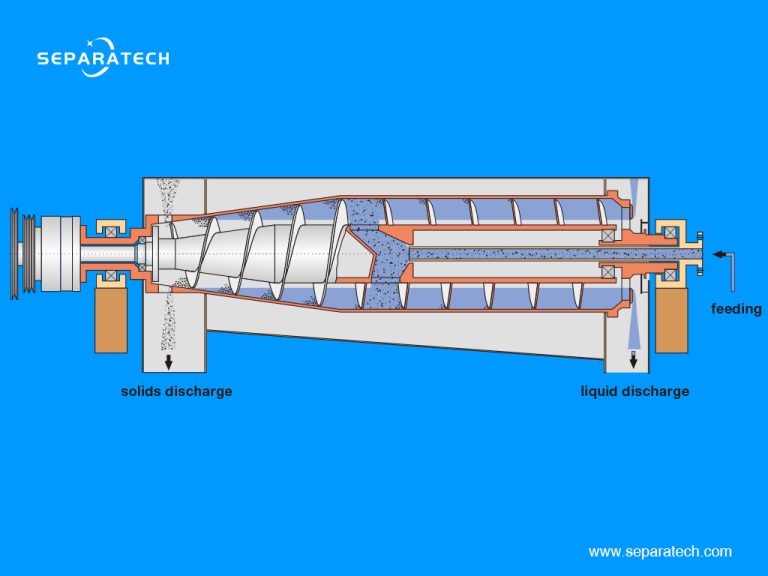
- High Solids Concentration (Slurry): Perfect for continuous Decanter Centrifuges, which utilize an internal conveyor scroll to continuously push out heavy solids cakes.
- Crystalline Solids with High Permeability: Best suited for continuous Pusher Centrifuges or Peeler Centrifuges that rely on centrifugal filtration rather than pure sedimentation.
Evaluate Your Slurry Prerequisite with SEPARATECH
Are you unsure if your current material meets every prerequisites for centrifugation? Don’t leave your equipment procurement to guesswork.
At SEPARATECH, our experienced separation engineers analyze your slurry’s specific density, viscosity, temperature, and particle size distribution to match your process with the perfect decanter, separator, or filter system.