Manual Discharge Disc Centrifuge
Manual Discharge Disc Centrifuge, also known as solid wall bowl centrifuge, Solids-retaining separator, features its solid wall bowl, or cylindrical bowl design. Compared with the self-cleaning separator, the solids-retaining separator with solid wall bowl is not able to periodically discharge the separated solids at full speed. Because there is no hydraulic system. So, all solids separated out shall be retained in the solid wall bowl, and it shall be removed manually. This is so called solids retaining separator.
By generating exceptional centrifugal forces exceeding 10,000G combined with an expansive clarification area inside the conical disc stack, SEPARATECH provides global pharmaceutical, essential oil, chemical, and laboratory operators with a highly reliable, cost-effective vertical separation solution designed to maximize liquid centrate clarity while ensuring gentle, non-turbulent fluid management across our entire disc stack centrifuge portfolio.
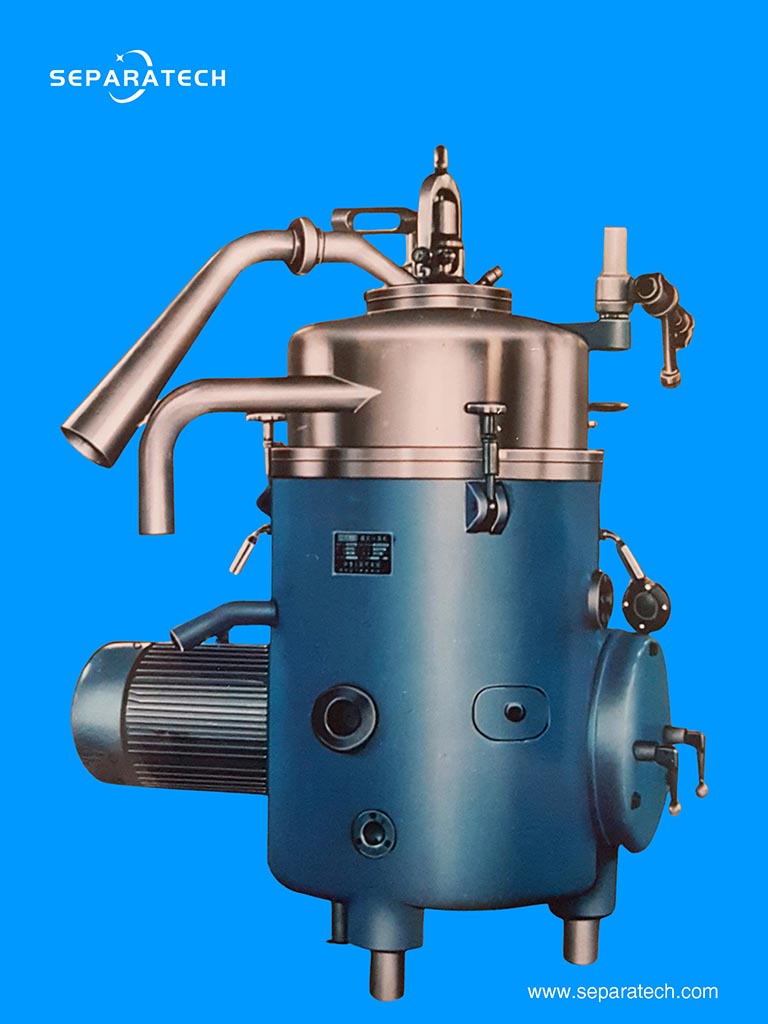
The SEPARATECH manual discharge disc centrifuge represents the premier industrial milestone for processing light feed slurries with exceptionally low solid concentrations, delivering unparalleled fluid clarification and high-purity phase isolation where automated shooting models are economically or operationally impractical. Often classified as a solid-retaining disc separator, our robust manual discharge disc centrifuge series is engineered specifically for applications where the solid phase is extremely fine, low in volume, or represents a highly valuable product that must be recovered with zero mechanical breakdown loss.
By generating exceptional centrifugal forces exceeding 10,000G combined with an expansive clarification area inside the conical disc stack, SEPARATECH provides global pharmaceutical, essential oil, chemical, and laboratory operators with a highly reliable, cost-effective vertical separation solution designed to maximize liquid centrate clarity while ensuring gentle, non-turbulent fluid management.
Hydro-Dynamic Working Principle of Solid-Retaining Separation
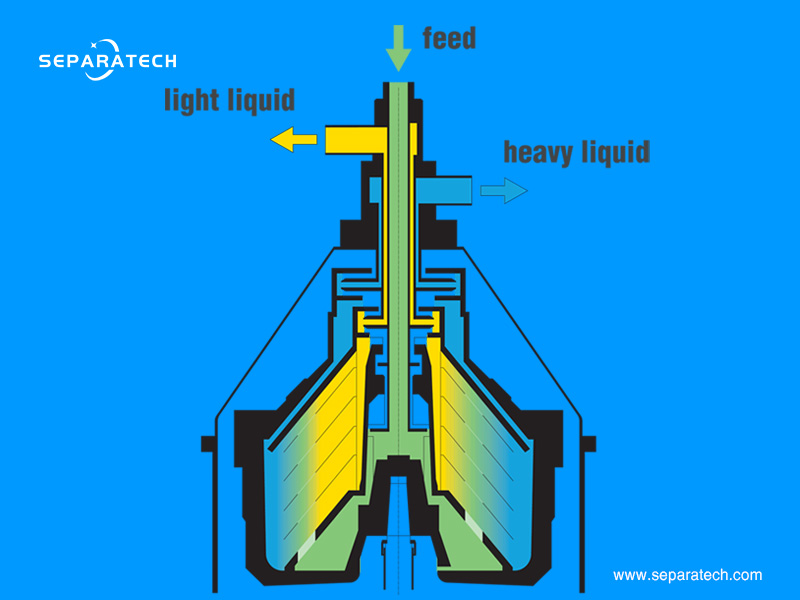
The operating superiority of an industrial manual discharge disc centrifuge relies on a continuous fluid feed matrix coupled with a dedicated, high-capacity internal sediment holding chamber. The feed suspension undergoes three highly synchronized mechanical phases inside the vertical rotating solid-retaining bowl assembly:
- Non-Turbulent Material Feeding: The raw low-solids fluid enters the vertical bowl coaxially through a stationary top inlet pipe. Upon reaching the center spindle assembly, the material enters a specialized smooth-acceleration distributor. The fluid transitions smoothly to match the high rotational speed of the bowl, completely mitigating hydraulic shear stress and preventing the structural fragmentation of delicate biological cells or sensitive chemical compounds.
- High-Speed Disc Stratification: The accelerated liquid is directed upward through the intricate conical disc stack. Under intense centripetal acceleration, the heavy suspended micro-solids are flung outward against the underside of each conical disc, sliding downward into the peripheral V-shaped sludge holding space of the solid bowl. Because there are no peripheral discharge ports, these solids are retained safely within the bowl’s holding zone.
- Continuous Pressurized Liquid Discharge: Concurrently, the clarified fluid tracks inward along the top surface of the discs toward the center axis. The clear liquid phase travels upward to the top chamber, where it is intercepted by a stationary centripetal pump (paring disc) and discharged out of the Manual Discharge Disc Centrifuge under pressure in an absolute air-free state to prevent product foaming, emulsion rebuilding, or oxidation.
Mechanical Advantages of Solid-Retaining Bowl Architecture
The definitive structural advantage of a SEPARATECH manual discharge disc centrifuge lies within its simplified, high-integrity solid bowl design, engineered to deliver distinct operational benefits over automated shooting variants:
- Zero Volumetric Feed and Liquid Loss: In self-cleaning disc stack centrifuge models, automated periodic discharges inevitably eject a small fraction of the valuable liquid phase along with the sludge. Our solid-retaining bowl architecture guarantees that 100% of the valuable fluid phase remains inside the closed process stream, maximizing yield for expensive essential oils, premium flavorings, and pharmaceutical fractions.
- Maximum Sludge Concentration and Cake Recovery: Because the accumulated solids are never diluted by hydraulic operating water or flushed out aggressively, they compact naturally into a highly dense cake against the bowl wall. This allows operators to recover the solids in their absolute purest, most concentrated paste form during manual cleaning cycles.
- Simplified Mechanical Integrity: By eliminating sliding pistons, hydraulic operating water chambers, shifting seals, and automated shooting valves, the solid-retaining frame possesses fewer moving parts. This drastically reduces mechanical wear, lowers capital investment, and ensures long-term operational reliability with minimal spare parts dependency.
Structural Blueprint and Technical Architecture
To endure years of continuous high-speed vertical rotation and intense gravitational loads without mechanical fatigue, the SEPARATECH manual discharge disc centrifuge is built with heavy-duty structural metallurgy and advanced electronic controls:
- Centrifugally Cast Duplex Stainless Steel Bowl: The entire high-load rotating bowl assembly is manufactured from high-tensile duplex stainless steel to comply with international high-grade duplex stainless steel standards. This ensures flawless structural integrity, zero micro-porosity, and absolute resistance to stress corrosion cracking under maximum centrifugal loading.
- Quick-Release Bowl Design for Rapid Cleaning: To minimize operational downtime during cake removal, SEPARATECH incorporates a specialized quick-release bowl hood clamping mechanism alongside customized internal liner inserts. This structural setup allows operators to open the bowl, extract the compacted solid cake, wipe the disc stack clean, and reassemble the machine rapidly.
- Advanced Variable Frequency Drive (VFD) Matrix: Driven by heavy-duty motors controlled by a fully responsive VFD electronic grid. This configuration provides smooth, controlled belt-driven or direct-drive acceleration, reducing start-up current spikes and allowing field adjustments of bowl speeds to match specific processing viscosities.
- Vibration-Isolated Suspension Spindle: Supported by precision-matched vertical bearings, the drive spindle incorporates a highly resilient, vibration-absorbing spring suspension system that easily dampens transient imbalances caused by inconsistent solids distribution profiles.
Critical Applications Across Premium Low-Solids Sectors
The high-purity clarification capacity and simplified operation of our manual discharge disc centrifuge series make it the primary processing choice across diverse global manufacturing sectors:
- Essential Oil & Botanical Extractions: Clarification of high-value plant extracts, isolation of citrus oils, concentration of natural flavors, and removing sub-micron botanical waxes from winterized solvent mixtures.
- Pharmaceutical & Biotech Laboratories: Small-batch harvesting of cellular biomass, separation of high-purity blood plasma proteins, and clarification of diagnostic enzymes where zero product loss is mandatory.
- Dairy & Food Processing Pilot Lines: Small-scale cream skimming, milk fat standardization, and high-clarity clarification of premium juices, wines, and vinegar batches during product development phases.
- Industrial Oil & Lubricant Purification: Batch conditioning of turbine oils, hydraulic oils, and high-precision machinery lubricants where solid contamination levels are low but fluid cleanliness demands are extreme.
Advanced Settlement Dynamics of Manual Discharge Disc Centrifuge Systems
Maximizing the batch efficiency of a manual discharge disc centrifuge requires an expert understanding of internal settlement dynamics and interfacial fluid mechanics. By leveraging advanced principles of fluid dynamics and settling velocities, our process engineers optimize the exact spacing of the conical discs to ensure peak liquid-solid separation for sub-micron particulates down to 0.5 microns.
Furthermore, managing the precise fluid retention time inside the solid-retaining bowl allows operators to predict exactly when the sediment holding space will reach maximum capacity based on feed turbidity. This advanced capability allows the system to manage varying feed densities smoothly while maintaining premium liquid clarity, exceptional heavy paste concentration, and ultra-low energy consumption under full operational capacities.
Custom Engineering of Manual Discharge Disc Centrifuge Solutions
No two low-solids clarification or high-value product concentration challenges share identical particle size distributions. SEPARATECH’s dedicated team of process engineers can fully customize the disc spacing configurations, caulking strip dimensions, bowl sediment holding volumes, and frame geometries to align perfectly with your specific fluid viscosity, material density differentials, and sanitary compliance challenges.
Contact SEPARATECH today to collaborate with our high-speed vertical separation specialists. We will provide a comprehensive process evaluation, laboratory pilot testing protocols, and a fully optimized manual discharge disc centrifuge technical proposal designed to maximize your production throughput and processing efficiency worldwide.